ラベル Kanto region の投稿を表示しています。 すべての投稿を表示

2017年3月25日土曜日

Kegon Waterfall

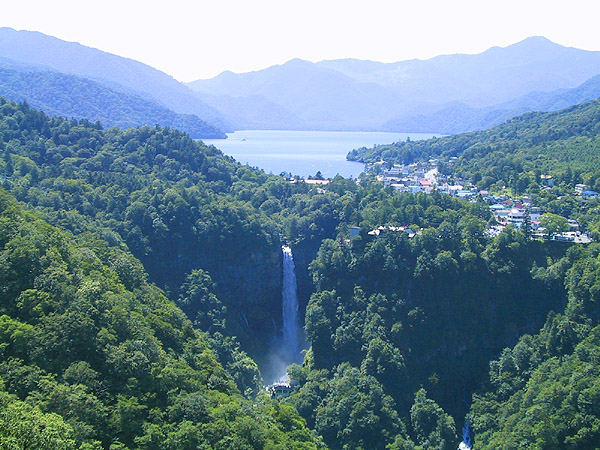
It is the most famous of Nikko's lots of beautiful waterfalls. In fact, it is even ranked as one of Japan's three most beautiful falls, along with Nachi Waterfall in Wakayama Prefecture and Fukuroda Waterfall in Ibaraki Prefecture. 


It is the only exit for the waters of Lake Chuzenji. It can be seen from a free observation platform that is easily accessible on foot, as well as from a paid platform at the base of the falls. The paid platform is accessed via a 100 meter deep elevator and offers the more impressive views.  


Kegon Waterfall is also a popular autumn color spot. The trees around the waterfall are usually most colorful from mid to late October. In the winter, the waterfall is impressive as well, when it freezes almost completely solid.


2017年3月16日木曜日

Yamashita Park

This public park stretches about 750 meters along Yokohama's waterfront. It is about a hundred meters wide, and contains mostly of open green space. It was constructed after the Great Kanto Earthquake of 1923.


Walking through Yamashita Park, it is hard to miss the massive ocean liner in the water beside the promenade. The ship is called the Hikawa Maru, and was first put into service in 1930 along the Yokohama-Vancouver/Seattle line. 


In 1960, after 30 years at sea, the ship was retired. It now serves as a museum, with informative displays and interiors in the style of the 1930s. 


Near the Hikawa Maru, Yokohama Marine Tower is also must-see. It is situated just beside the park and extends 106 meters into the air. The observatory also offers a 360 degree view, located 100 meters above ground.


2017年2月23日木曜日

Kururi Castle


The castle is located in Kimitsu, southern Chiba Prefecture, Japan.  At the end of the Edo period, the castle was home to a branch of the Kuroda clan, fuedal lord of Kururi Domain.


The original Kururi Castle was a mountain-top fortification built during the Muromachi period.  


In 1872, by orders of the Meiji government, the surviving structures of Kururi Castle were destroyed. The area, containing remnants of moats, earthen works and a well, became a park in 1955.


The current keep tower was reconstructed in 1979 to boost local tourism.

2017年1月31日火曜日

Inubosaki Lighthouse

It is located in Cape Inubo, in Choshi city, Chiba Prefecture. It is notable as one of the few lighthouses whose original lens was a first order Fresnel lens, the strongest type of Fresnel lens.


The lighthouse is registered as Tangible Cultural Property of Japan. It is located within the borders of the Suigo-Tsukuba Quasi-National Park.


It is currently open to the public, who may visit a small museum at its base, and climb to the top for a panoramic view over the Pacific Ocean.

2017年1月6日金曜日

The Rainbow Bridge


It is a suspension bridge connecting northern Tokyo Bay and the Odaiba waterfront development.


Construction started in 1987 and was completed in 1993. The bridge is 798 metres (2,618 ft) long with a main span of 580 metres (1,903 ft).


The towers supporting the bridge are white in color, designed to harmonize with the skyline of central Tokyo seen from Odaiba.

2016年9月28日水曜日

Naritasan Shinshoji Temple

It is a large and highly popular Buddhist temple complex in Narita City, not far from Narita Airport. It is recommended site to visit if you have a few hours to spend around the airport and wish to experience historic Japan.


The temple was completed in the year 940 around its main sacred object of worship, a statue of the Buddhist Fudo Myoo deity. Kobo Daishi, the founder of the Shingon Sect and one of the most important figures in Japan's religious history, is said to have carved the statue.


One of the attractions is its store lined approach, the Omotesando. Stretching over the entire one kilometer distance from Narita railway stations to the temple, Omotesando is a lively street lined by numerous restaurants and shops, that have been selling traditional crafts, foods and souvenirs.

2016年1月30日土曜日

Kinugawa Hot Springs

It is one of the popular hot spring destinations near Nikko in Tochigi Prefecture, Kanto region. The clear, mild waters that flow from the area's hot springs have been in use since the Edo Period (1603-1867), and can be experienced at Kinugawa Hot Spring's ryokan and public baths.


Most visitors overnight at one of the largest hotel ryokan overlooking the Kinugawa River. Each of the ryokan has its own baths, some of which are open to non-staying guests during daytime.


Additionally, there are several public baths that are open to anybody. A few free foot baths are also available around Kinugawa Hot Springs. 


2015年12月14日月曜日

Ameyoko

Ameyoko is a busy market street along the Yamanote Line between Okachimachi and Ueno Stations.The name Ameyoko is a short form for Ameya Yokocho (candy store alley), as candies were traditionally sold there.  


Alternatively, Ame also stands for America, because lots of American items used to be sold there when the street was the place of a black market after World War Two.


Today, various products such as clothes, bags, cosmetics, fresh fish, dried food and spices are sold along Ameyoko.


Opening hours and closing days depend on individual stores, but stores typically open around 10:00 and close around 19:00.

2015年11月24日火曜日

Oya Temple


It is a Buddhist temple of the Tendai sect in the city of Utsunomiya, Tochigi Prefecture. 


According to legend, the temple was established by Kukai, the founder of the Shingon sect, in 810, The temple was reconstructed during 1615 to 1624.  


The temple is built into the surrounding tuff rock and features a carved figure of the Bodhisattva Kannon with a thousand arms with a surrounding altar. 


Nearby park features a massive statue of Kannon Bodhisattva, called the Kannon of Peace carved after World War II. 


2015年6月15日月曜日

Hakone Tozan Railway

Hakone Tozan Railway, Japan's oldest mountain railway, is one of the most recommended attractions in Hakone area. The small trains wind themselves through a narrow, densely wooded valley over lots of bridges and tunnels, stopping at tiny stations along the way and changing directions at three switchbacks. 


The Hakone Tozan Line contains two sections. The lower section from Odawara to Hakone-Yumoto is used by Odakyu trains from central Tokyo like ordinary trains. Far more spectacular is the upper section from Hakone-Yumoto to Gora, which is served by the small mountain trains. At Gora, many travelers transfer to the cablecar for Lake Ashi. 


The 35 minute train ride from Hakone-Yumoto to Gora is especially outstanding in June and July when thousands of hydrangea are in bloom along the tracks and are illuminated during the evenings. The flowers are usually best around the beginning of July and can be seen from the trains and around the stations.


2015年5月15日金曜日

Mount Nokogiri


It is literally "saw mountain" in Japanese, which is a low mountain (Elevation:329.5m / 1,081 ft) on the Boso Peninsula in Chiba Prefecture. It falls steeply into Tokyo Bay on its western side, where it is pierced by two road tunnels and a rail tunnel, carrying the Uchibo Line south from Futtsu to Tateyama.


The western side of the mountain is the site of magnificent Nihon temple complex, which is the home
of two Daibutsu sculptures, a huge seated carving of Yakushi Nyorai that at 31.05 metres (101.9 ft) tall is the largest pre-modern, stone-carved Daibutsu in the country,and the Hundred-shaku Kannon, a tall relief image of Kannon carved into one of the quarry walls as well as 1500 hand-carved sculptures, which combined with the panoramic view of the Boso Hills and Tokyo Bay, make Mount Nokogiri a popular tourism destination.


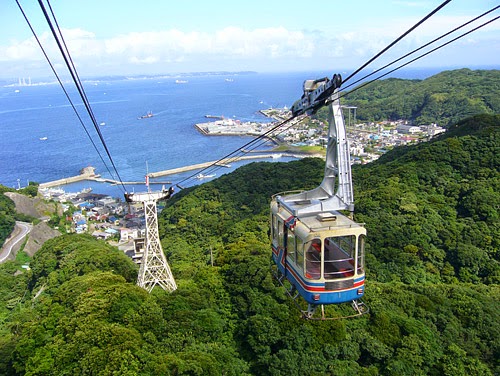
The temple is easily accessible by road and by a cable car, the Mt Nokogiri Ropeway, which operates from Hamakanaya Station on the JR Uchibo Line to a lookout deck near the top of the temple site.


2015年5月2日土曜日

Hitachi Seaside Park


During holiday-studded week, which is called Golden Week holidays in Japanese, I went to the park at work to see beautiful blooming flowers.


Hitachi Seaside Park covers an area of 190 hectares, the park mainly features blooming flowers around the year. The park has become known for its baby blue-eyes flowers, with the blooming of 4.5 million of blue flowers in the spring.


In addition to the annual "Nemophila Harmony", the park features a million daffodils, 170 varieties of tulips, and many other flowers. The park includes cycling trails and a small amusement park with a Ferris wheel.


This park is definitely recommended especially for families with kids.

The nearest railway station is Katsuta Station on the JR Joban Line.

Hitachi Seaside Park

2015年4月24日金曜日

Tokyo Metropolitan Government Building

This is one of the recommended tourist spots, which is located in Shinjuku. Tokyo Tocho is often visited by tourists for its free observation decks which provide good panoramic views of Tokyo and beyond.


The 243 meter tall building has two towers, and each houses an observatory at a height of 202 meters. It had been the tallest building in Tokyo until it was overtaken by the Midtown Tower in 2007.


With favorable weather conditions, well-known landmarks such as Mount Fuji, the Tokyo Skytree, Tokyo Tower, Meiji Shrine and the Tokyo Dome can be seen from the observatories. Each observatory has a cafe and a souvenir shop. The North Observatory remains open later at night, usually by 23:00, making it a popular spot to enjoy night views of the city.


Tourist information center is located on the first floor, so that you could grab maps and brochures written in English. English-speaking staffs are available.