It is also known as Kameyama Castle, is a hilltop castle in Marugame City.
It has a commanding view of the city below and overlooks one of the narrowest parts of the Seto Inland Sea. Marugame Castle is one of only twelve castles remaining in Japan that have survived the post feudal ages (since 1868) with their keep buildings intact.
It was originally constructed from 1597 to 1602 by Ikoma Chikamasa, the feudal lord who also built Tamamo Castle in nearby Takamatsu.
However, due to a new policy by the shogun that limited the number of castles per province to just one, The Castle was abandoned again just 13 years after its completion. The castle was rebuilt in 1660 after the province had been split into two.
Over the centuries many of the castle buildings were destroyed by fires, and now only the original keep and several of the castle gates remain.
Nijushi no Hitomi or Twenty-Four Eyes is a 1954 movie filmed on
Shodoshima island in Kagawa prefecture that follows the lives of a
school teacher and her first class of students as they grow up on the
island during the rise of Japanese nationalism in the leadup to World
War two.
After the shooting of a color remake in 1987, the movie location used
for the filming was opened to the public as the Nijushi no Hitomi
Eigamura movie village.
The movie set consists of an entire reconstructed village, including a
school building, over a dozen homes, a shrine, a canal and a few fields.
Visitors can enter all the buildings, some of which were transformed
into restaurants, shops and small museums.
The village offers a nostalgic atmosphere of past decades, and is pleasant to explore even by those who have not seen the movie.
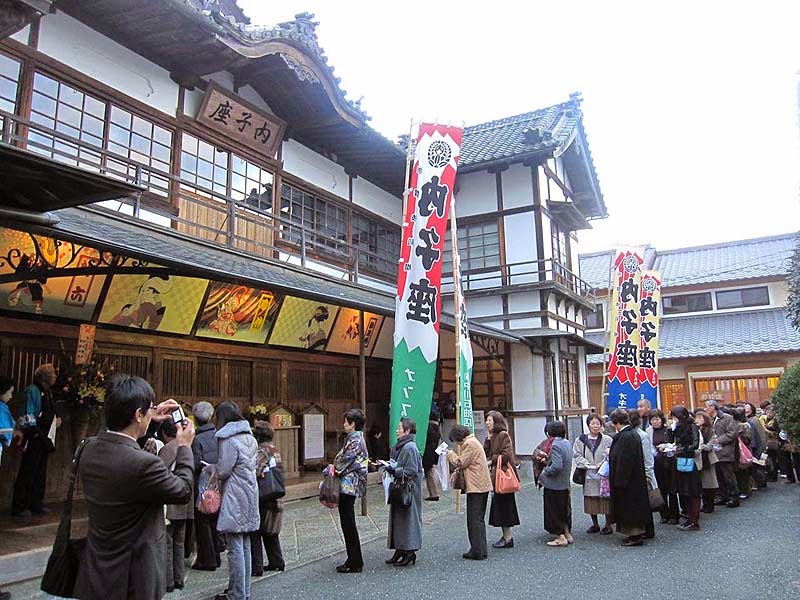
Uchiko-za is a fully operational kabuki theater in the center of Uchiko town in Ehime Prefecture, and the symbol of Uchiko. The magnificent, multi-story building was built in 1916 and continues to occasionally host various events, including kabuki and bunraku performances.
Visitors can enter Uchiko-za and explore the many trap doors and hidden passageways around the stage. Kabuki stages are known for their elaborate design, allowing for sudden dissapearances, dramatic entrances and so on. At Uchiko-za, visitors have the opportunity to examine the mechanics of such stage choreography.
The theater is expected to be registered as Important Cultural Property this year.